
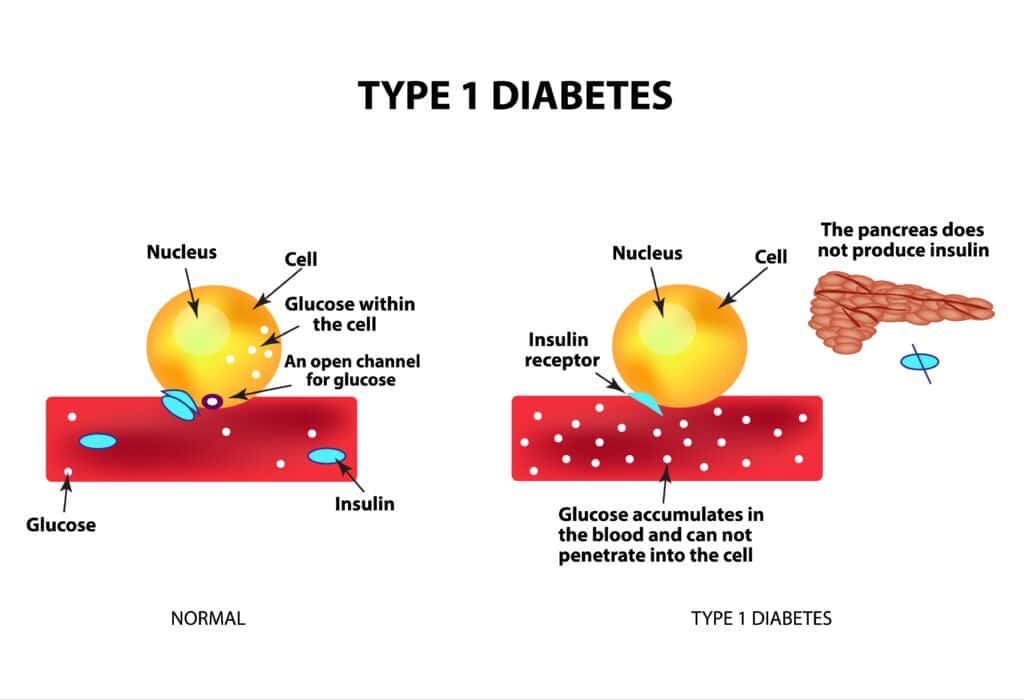
- Type 1 diabetes (T1D) is a chronic autoimmune disease that destroys the beta cells of the pancreas through the body’s own immune system.
Unlike type 2 diabetes, which is primarily driven by lifestyle and metabolic factors, type 1 diabetes is mostly influenced by genetic and immune factors.
Among other genes that have been associated with T1D, the Human Leukocyte Antigen (HLA) region has been identified as the most important genetic contributor.
The HLA-DR gene is significantly expressed in patients with autoimmune diabetes.
It has been postulated that specific variants of the HLA-DR gene, particularly HLA-DR3 and HLA-DR4, are strongly associated with the development of T1D.
The presence of these gene variants can alter the function of immune cells, leading to their inappropriate attack on pancreatic beta cells.
This can lead to a cascade of immune responses which ultimately destroy the normal function of the pancreas in producing insulin.
As a result, blood sugar levels begin to rise, leading to the manifestation of diabetes symptoms.
According to bestdietarysupplementfordiabetics.com, “Understanding the role of the HLA-DR gene is therefore essential for explaining why some people develop type 1 diabetes while others do not, even when they share similar environmental exposures”.
Article Index
- Understanding the Human Leukocyte Antigen (HLA) System
- What Is the HLA-DR Gene?
- Location of the HLA-DR Gene in the Human Genome
- How HLA-DR Genes Influence Immune Recognition
- High-Risk HLA-DR Variants Associated With Type 1 Diabetes
- Step-by-Step Mechanism of Autoimmune Beta Cell Destruction
- Role of HLA-DR3 and HLA-DR4 in Type 1 Diabetes Development
- Statistical Evidence Linking HLA-DR Genes to Diabetes Risk
- Protective HLA Variants That Lower Diabetes Risk
- Genetic Screening and Future Research on HLA-DR
- FAQ: HLA-DR Gene and Type 1 Diabetes
Understanding the Human Leukocyte Antigen (HLA) System
The Human Leukocyte Antigen (HLA) is a cluster of genes that encodes various proteins involved in the body’s immunesystem.
In particular, they are responsible for the body’s ability to identify its own proteins and antigens and differentiate them from the foreign ones, which invade the body from outside, e.g., bacteria or viruses.
HLA genes encode cell-surface receptors responsible for presenting antigenic peptides to T-cells, enabling the body to mount an appropriate response.
They are highly polymorphic, meaning that they can vary considerably from one individual to another.
This property is especially important for the immune response because it allows diverse recognition of foreign antigens, providing increased protection against various ailments.
There are three classed of HLA genes:
• class I,
• class II,
• and class III.
HLA class II is considered to play the major role in type 1 diabetes since it encodes the molecules of helper T-cells, whose activity is out of control in this disease.
The reason why different people have different mixes of HLA genes most probably is that they live in different environments, exposing them to different microbes. Genes encoding different HLA molecules are passed to children from their parents, thereby providing them with protection against various diseases, too. However, there is also such a possibility that specific genes that increase the risk of autoimmune diseases, including type 1 diabetes, might also get inherited.
What Is the HLA-DR Gene?
HLA-DR Gene in Relation with Disease Mechanism Essay
The HLA-DR gene is part of the HLA Class II genes, which are known to encode proteins essential for the immune system. Specifically, they present antigens to CD4+ T cells, which recognize and respond to foreign substances in the body.
The genes produce two protein chains, namely:
- An alpha chain
- A beta chain
The latter is found to be very variable, as it encodes the specificity of the antigen. This means that altering this part of the protein can lead to different outcomes.
In some cases, the presentation of the self-antigen leads to an autoimmune response, where the immune system attacks the cells in the body that produce insulin.
As a result, the body starts destroying the cells in the pancreas that create insulin, thus, type 1 diabetes develops.
Location of the HLA-DR Gene in the Human Genome
The HLA-DR gene family is located on the Major Histocompatibility Complex (MHC), which spans across the sixth chromosome. This cluster of genes encodes the immune-related proteins.
The MHC is the region of the genome that exhibits the highest degree of polymorphism. The high variability of genes coding for the proteins involved in the immune response accounts for the region’s extraordinary level of polymorphism.
On the MHC, the HLA-DR gene family is usually composed of several distinct genes, namely:
- DRB1
- • DRB3
- • DRB4
- • DRB5
HLA-DR family genes are highly polymorphic, encoding different HLA-DR proteins that bind to distinct antigenic peptides.
As a result, because people typically inherit two HLA alleles per gene, one from each parent, an individual’s HLA genotype may encode more than one HLA-DR protein variants.
The combination of HLA alleles inherited from one’s parents is referred to as an HLA haplotype and is strongly associated with the risk of developing an autoimmune disease.
How HLA-DR Genes Influence Immune Recognition?
HLA-DR Molecules and Autoimmune Disease: Mechanism Explanation Essay
The immune system uses antigen presentation to distinguish between molecules needing a response and those that do not require any action. HLA-DR molecules are essential for the process because they carry protein fragments to helper t-cells.
Normally, all the presented fragments are from bacteria, but HLA-DR molecules can also carry protein fragments from a person’s body.
Autoimmune diseases develop when HLA-DR molecules present protein fragments from a person’s pancreas. This situation occurs mainly in type 1 diabetes patients.(helper t-cells) think that the presented protein fragments are foreign substances and attack them along with healthy body cells.
As a result, an autoimmune response develops, leading to the reduction of healthy cells in the pancreas. Specifically, inflammatory processes lead to the destruction of islets of Langerhans, beta-cells, and insulin production.
High-Risk HLA-DR Variants Associated With Type 1 Diabetes
Certain variants within the HLA-DR gene possess a notably increased risk of triggering the development of type 1 diabetes.
Among the most significant polymorphic determinants are:
- HLA-DR3
- • HLA-DR4
The presence of any of the described above HLA-DR variations implies higher chances of developing autoimmune diabetes as compared to healthy controls.
However, the likelihood of triggering disease progression skyrocket upon simultaneous inheritance of both HLA-DR3 and HLA-DR4 alleles due to a stronger overall autoreactive T-cell response towards pancreatic proteins. As a result, children with such a genotype exhibit increased odds of presenting with autoantibodies to islet cells.
Step-by-Step Mechanism of Autoimmune Beta Cell Destruction
The evolution of type 1 diabetes is frequently gradual and involves a number of autoimmune processes. TheHLA-DRgene plays an important role in this since it encodes several crucial steps in this direction.
Step 1 – Genetic susceptibility:
A person can inherit certain high-risk variants of HLA-DR from either parent or both.
Step 2 – Environmental trigger:
An external factor (e.g., an infection) or a malfunction in the immune system.
Step 3 – Presentation of antigen to helper T-cells:
HLA-DR molecules carry snippets of protein from the pancreas and present them to helper T-cells.
Step 4 – Activation of cytotoxic and B cells:
Helper T-cells turn on cytotoxic T-cells and B-cells to target and attack the pancreatic cells.
Step 5 – Production of autoantibodies:
The immune system makes antibodies to insulin and other pancreatic proteins.
Step 6 – Destruction of pancreatic tissue:
Lymphocytes invade the pancreas and destroy its insulin-producing cells.
Step 7 – Diabetes mellitus:
The body is unable to make enough insulin, resulting in increased levels of sugar in the blood.
Role of HLA-DR3 and HLA-DR4 in Type 1 Diabetes Development
The Two Main Genes Responsible for Developing Type 1 Diabetes Essay
Two main HLA genes are associated with type 1 diabetes susceptibility, namely, HLA-DR3 and HLA-DR4. Both are linked to an increased risk of type 1 diabetes but have different mechanisms in terms of immune response.
The presence of the DR3 gene is mainly associated with an increased production of antibodies to insulin, which are mediated by helper T-cells. In turn, the DR4 gene is associated with proinflammatory responses, which lead to faster destruction of the cells in the pancreas.
Combinations of these genes result in an even higher autoimmune response against pancreatic cells. Specifically, the simultaneous occurrence of DR3 and DR4 is associated with a significantly increased risk of developing type 1 diabetes due to a robust response of cytotoxic T-cells and helper T-cells against various antigens on the surface of pancreatic beta-cells.
Statistical Evidence Linking HLA-DR Genes to Diabetes Risk
Large genetic studies have shown that the HLA region makes the biggest contribution to genetic susceptibility to type 1 diabetes.
HLA genes are responsible for up to 40-50% of the inherited risk for the disease, making them the most significant type 1 diabetes susceptibility genes.
People who have been diagnosed with autoimmune type 1 diabetes as children or adolescents most frequently have DR3, DR4, or a combination of DR3/DR4.
However, only a relatively small percentage of patients with these gene variants actually develop type 1 diabetes, which suggests that gene alone cannot explain the risk factors for the disease and that environmental factors also play a role.
Protective HLA Variants That Lower Diabetes Risk
While some HLA genes predispose to autoimmune diabetes, others seem to offer protection.
The protective genes probably act by improving the general immune response so that autoreactive T cells are removed effectively
A better immune response leads to improved tolerance to one’s own proteins and, therefore, decreases the likelihood that an autoimmune attack will occur
As a result, people who have these protective genes are less likely to develop diabetes, even when they have other genes that contribute to diabetes.
Genetic Screening and Future Research on HLA-DR
Contemporary advances in genetics allow for the identification of individuals who may be at risk of developing type 1 diabetes by genetic screening.
Current research programs include analysis of sets of:
HLA-DR genes
• HLA-DQ genes
• Diabetes-related autoantibodies
Children with a high genetic risk profile can then be observed for immunological changes related to the disease long before symptoms arise.
Studies are also considering treatments that could interrupt the autoimmune process before extensive destruction of the beta cells of the pancreas has occurred.
Subsequent research may contribute to future strategies to prevent the development of diabetes in those at highest genetic risk, as well as individualized approaches to genetic risk assessment and immunomodulatory therapy.
FAQ: HLA-DR Gene and Type 1 Diabetes
Q-1: How does HLA-DR gene causes type 1 diabetes?
A-1: The HLA-DR gene contributes to the process of type 1 diabetes through the alteration in the presentation of self-proteins. In particular, some variants of the HLA-DR gene lead to the production of proteins, which in turn trigger an autoimmune response against the cells in the pancreas that produce insulin.
Q-2: What is the role of HLA-DR3 and HLA-DR4 gene in type 1 diabetes?
A-2: Both HLA-DR3 and HLA-DR4 genes contribute to the etiology of type 1 diabetes because their presence increases the risk of developing this disease. Moreover, when a person possesses both of these genes, the chances of developing type 1 diabetes significantly rise.
Q-3: Why do HLA genes contribute to the risk of autoimmune diabetes?
A-3: The contribution of HLA genes is explained by the fact that they play a key role in presenting antigens to T-cells. In other words, they encode proteins that alert T-cells about the presence of foreign and dangerous proteins in the body.
Sometimes, they present self-proteins as foreign ones, and it leads to an autoimmune response that targets cells of one’s own body.
Q-4: Which HLA genotype has the highest risk for type 1 diabetes?
A-4: The combination of HLA-DR3 and HLA-DR4 genes increases the risk of developing type 1 diabetes, and this genotype is considered to be one of the strongest risk factors for the development of this disease.
Conclusion
The HLA-DR gene is historically significant because of its role in the formation of type 1 diabetes. This genetic risk factor can lead to the appearance of the disease due to its influence on the body’s recognition of proteins.
Diverse alleles of this gene are responsible for distinct information attached to the protein, found in the part of the human genome responsible for regulating the immune system. In particular, the gene’s position on chromosome 6 allows it to code for proteins that “present” pieces of antigens to helper T-cells.
Meanwhile, particular alleles, such as HLA-DR3 and HLA-DR4, are featured in increasing the possibility of developing diabetes because they cause the immune system to attack the cells in the pancreas that produce insulin.
These genetic predispositions, combined with environmental factors and genes unrelated to the HLA-DR sequence, can ultimately result in the development of the disease.
Presently, researchers continue their work on the immunological issue of type 1 diabetes. As a result, an increased understanding of the link between HLA genes and autoimmunity can be applied to develop enhanced screening, prevention, and treatment of this condition for those who are at risk.
Recommended:
- https://bestdietarysupplementfordiabetics.com/how-hla-dq-gene-causes-type-1-diabetes/
- https://diabetesjournals.org/care/article/48/2/202/157547/Genetic-Discovery-and-Risk-Prediction-for-Type-1
- https://pmc.ncbi.nlm.nih.gov/articles/PMC10659516/
- Why trust bestdietarysupplementfordiabetics.com?
- For educational purpose only

admin
All Posts