Type 1 diabetes is an autoimmune disease that results when the body’s immune system destroys insulin-producing cells in the pancreas.
Insulin is a hormone that facilitates lowering blood sugar levels; if insulin-producing cells are destroyed, blood sugar levels become dangerously high.
While there is no doubt that both autoimmunity and genetic syndromes contribute to the development of type 1 diabetes, it is considered to be more related to external factors than to genetic ones.
The research conducted over the last two decades has revealed that a significant number of environmental triggers can lead to the development of type 1 diabetes.
One of these triggers is a viral infection that targets the pancreas and damages insulin-producing cells, replacing them with fibrous tissue.
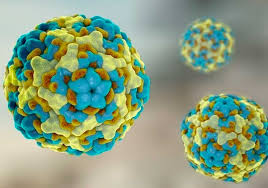
The most common enteroviruses that infect humans are harmless for most people, as they only stay in the body for a short time and seldom present any symptoms.
Nevertheless, scientists have discovered that for some people with a genetic predisposition, a viral infection could provoke an autoimmune response that would lead to type 1 diabetes.
According to epidemiological studies, children who have had an enterovirus infection have a 40-50% higher risk of developing type 1 diabetes than those who have not been infected.
In addition, research has found that people who have type 1 diabetes are 8-10 times more likely to test positive for enteroviruses.
These results prompted scientists to take a closer look at the connection between viral infections and type 1 diabetes.
The information about enterovirus’s role in the development of type 1 diabetes could contribute to the creation of effective prevention methods and treatments.
This article on bestdietarysupplementfordiabetics.com provides an in-depth understanding of how exactly viruses participate in the development of type 1 diabetes.
Article Index
- Understanding Enteroviruses
- Global Statistics of Type 1 Diabetes
- The Role of Genetics in Type 1 Diabetes
- How Enteroviruses Infect the Human Body
- Viral Infection of Pancreatic Beta Cells
- Immune System Activation and Autoimmune Damage
- Molecular Mimicry and Immune Confusion
- Persistent Viral Infection in the Pancreas
- Childhood Exposure and Environmental Risk Factors
- Why Enterovirus Infection Does Not Cause Diabetes in Everyone
- Frequently Asked Questions (Top Long-Tail Keywords)
- Conclusion
Understanding Enteroviruses
Enteroviruses belong to family Picornaviridae. More than 100 kinds of these viruses are able to infect humans. The most common representatives of the family are polioviruses, echoviruses, and coxsackieviruses.
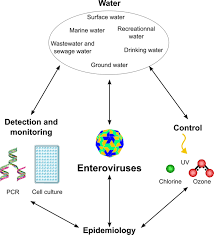
They are transmitted through food and water, respiratory tract, and physical contact. Moreover, they are highly common and able to infect people of all ages, spreading very quickly from person to person. Most people are infected by the viruses before the age of five, often several times.
In most cases, the infection is mild and causes only a few symptoms, like fever or cough. Moreover, enteroviruses are frequently linked with serious disease, like meningitis or encephalitis. However, there are some kinds of these viruses that are able to infect not only the central nervous system but also the heart muscle, pancreas, and other endocrine glands.
Researchers noted that one type of coxsackievirus called Coxsackievirus B1 is able to infect and destroy insulin-producing cells of the pancreas. Scientists also suggested that enteroviruses may cause an autoimmune response that targets the β-cells of the pancreas.
That is why researchers suppose that these infections might trigger and assist the development of Type 1 diabetes. Moreover, they are linking constant infections and especially infections of the digestive tract with the development of the disease. Researchers also mentioned that most people infected by enteroviruses are children. That is why the scientists’ attention was focused on the relationship between these viruses and Type 1 diabetes.
Global Statistics of Type 1 Diabetes
Type 1 diabetes occurs in 5-10% of all people with the disease worldwide. It is less common than type 2 but appears to be on the rise globally.
Over 8.7 million individuals are estimated to be living with type 1 diabetes worldwide, with the vast majority diagnosed during childhood or adolescence. In the United States, about 1.6 million people are estimated to live with the disease.
Type 1 diabetes incidence seems to be increasing by 3-4% annually worldwide. Researchers suspect that the increase is not solely due to genetics since human genome evolution occurs at a much slower rate than observed in recent decades.
Type 1 diabetes risk factors include being infected by a virus that may cause autoimmunity and attacks on the body’s own pancreatic cells.
Epidemiology studies conducted on hundreds of thousands of children show that viral infections frequently precede autoantibody responses in the development of type 1 diabetes.
The Role of Genetics in Type 1 Diabetes
Although the viral infections could trigger the disease, genetics plays an important role in determining who gets type 1 diabetes.
There are some immune system genes that increase the risk that the body will have an abnormal response to infections, and a person with a predisposition to these diseases is more likely than average to develop autoimmunity and type 1 diabetes.
Genetics plays a part in type 1 diabetes, as having a relative with the disease increases the risk by 15 times compared to the general population. But the inheritance of genes does not necessarily determine whether a person will get it.
The reason there is a genetic component to the disease is because there is an interaction between genes and the environment; thus, there are genes that increase the risk but do not cause it, and the infection has to be present for the disease to develop. The enterovirus infections are among the most important viruses in the development of the disease. Individuals with genetic predispositions to autoimmunity and diabetes have abnormal responses to these infections.
How Enteroviruses Infect the Human Body?
The enterovirus penetrates the body with food or air. Then it actively replicates in the pharynx, gastrointestinal tract, and regional lymph nodes.
After that, it gets into the bloodstream, and other organs and tissues are affected — the viremic period begins. During this period, the virus infects muscle tissue, nerve cells, and the heart. Moreover, the pancreas and, in particular, insulin-producing cells can be affected. The virus adheres to special receptors on the surface of cells and penetrates into them. Then it sheds into the cytoplasm, where it hides for a while, after which it copies itself and creates thousands of new viral particles. These particles then infect other cells.
In most cases, the immune system fights off such an attack and protects the body from the harmful effects of the virus. However, if the virus enters the pancreas and destroys the islets of Langerhans or the immune system mistakenly targets the cells of this organ, type 1 diabetes develops.
Viral Infection of Pancreatic Beta Cells
The pancreas has hormone-producing cells called the islets of Langerhans. These are clusters of cells, amongst which are the beta cells, responsible for producing insulin.
Enteroviruses have the capability of invading the beta cells of the islets of Langerhans.
Studies conducted in laboratories reveal that coxsackievirus B can penetrate beta cells and start replicating.
Once inside the cell, it can lead to
the destruction of the cell
production of viral protein on the surface of the cell
presentation of viral protein as foreign substances
Consequently, the body’s immune cells will try to get rid of the virus by attacking and destroying the beta cells. Sometimes, this attack can continue even when the virus is gone.
Gradually, and with time, the attack destroys most of the beta cells until approximately 90%, and the pancreas can no longer produce sufficient insulin to control blood-sugar levels, leading to Type 1 diabetes.
Immune System Activation and Autoimmune Damage
The immune system is a complex and sophisticated body defense mechanism that prevents the invasion of pathogens and infectious organisms. When a virus, bacterium, or another invasive microorganism attacks the body, specialized immune cells produce and secrete special chemicals that initiate the defensive response.
However, sometimes the immune system stops working correctly, and instead on attacking a virus, the immune cells start destroying healthy cells. Such dysfunction of the immune system is called autoimmunity. In people with type 1 diabetes, autoimmunity manifests as antibodies against the pancreatic islet cells.
The bodies of those who suffer from Type 1 diabetes have the autoimmune response, which causes the creation of antibodies against the cells of the pancreas. The antibodies are usually formed several years before the appearance of the symptoms of this disease. The body’s immune system slowly destroys the healthy cells, and this process stops producing insulin. When the majority of cells are dead, the person gets diabetes as a result of high blood sugar levels.
Molecular Mimicry and Immune Confusion
One of the proposed mechanisms that explain how viruses can trigger an autoimmune response is called molecular mimicry.
Molecular mimicry is a process in which viruses’ protein parts are similar to human proteins.
Therefore, when the immune system generates antibodies against the virus, it can mistakenly target the same proteins in the body.
For instance, as regards enteroviruses, there is evidence that the protein portion of these viruses is structurally similar to proteins present on pancreatic beta cells.
This means that when a person mounts an immune response to fight off an infection caused by an enterovirus, their immune system may simultaneously attack their pancreatic beta cells.
Consequently, a person will experience an ongoing autoimmune attack that results in the gradual destruction of their beta cells and, eventually, Type 1 diabetes.
Persistent Viral Infection in the Pancreas
Another potential mechanism by which enteroviruses could contribute to the development of type 1 diabetes is persistent infection.
It is entirely possible that the infection may persist in the body on a chronic basis, leading to constant stimulation of the immune system.
This may induce autoimmunity by promoting chronic inflammation in the pancreas, which can lead to β-cell destruction.
Studies carried out on pancreatic tissues obtained from individuals diagnosed with type 1 diabetes reveal the presence of viral RNA, providing further evidence for the role of persistent infections in the development of the disease.
Childhood Exposure and Environmental Risk Factors
Type 1 diabetes most commonly occurs in children and adolescents. This fact is linked to the high incidence of various viral infections in early childhood.
There are several factors that may trigger autoimmune response against pancreatic beta-cells:
Widespread exposure to viruses in early childhood
• Seasonal virus epidemics
• Overcrowding
• Malnutrition
• Underdeveloped immune system
Children have poorly developed compensatory mechanisms; therefore, the impact of any infectious process is more significant.
Multiple viral infections in early childhood can affect the development and functioning of the immune system, contributing to autoimmunity. Thus, the combination of these factors increases the risk of developing type 1 diabetes in a person with a genetic predisposition.
Why Enterovirus Infection Does Not Cause Diabetes in Everyone?
Despite the strong link between enteroviruses and Type 1 diabetes, most people who encounter these pathogens do not develop the condition.
Factors that determine protection against autoimmune disease are:
Presence of strong regulatory immunity,
lack of associated risk alleles,
rapid removal of the virus from the body,
and
reduced ability of the virus to damage pancreatic cells.
In addition, there are different subtypes of enteroviruses, and only some of them are capable of invading the pancreatic tissue, whereas others only cause mild respiratory or gastrointestinal symptoms.
FAQs on Entrovirus & Type 1 Diabetes
Q-1: Can enterovirus cause type 1 diabetes?
A-1: Yes, because the virus acts as an environmental trigger for people who have genetic susceptibility.
According to the study by the CDC, NIDDK, and the University of Helsinki, children who have been infected by the virus exhibit a 40-50% higher risk of developing type 1 diabetes than their peers.
The virus infects the pancreas, causing the immune system to attack the β-cells.
Type 1 diabetes affects about 8.7 million people worldwide, of which 1.6 million are in the United States.
Therefore, scientists are willing to explore every lead, including viral infections, to understand how the disease develops.
Q-2: Which virus is associated with a higher risk of developing type 1 diabetes?
A-2: Scientists have identified that coxsackievirus B, which is part of the enterovirus family, is strongly connected to the development of type 1 diabetes.
Researchers from Karolinska Institute in Sweden, Tampere University in Finland, and the National Institutes of Health have found that coxsackievirus infection can lead to type 1 diabetes by invading and damaging pancreatic β-cells.
The study has revealed that people who have been infected with coxsackievirus B, especially B1-B6, have a doubled risk of developing diabetes-related autoantibodies.
Northern Europe, where the incidence of type 1 diabetes is the highest in the world, has the most comprehensive data on the association between coxsackievirus and diabetes.
Q-3: How can a virus trigger autoimmune diabetes?
A-3: A virus can trigger autoimmune diabetes in three ways: invading pancreatic β-cells, causing the immune system to attack the β-cells, and molecular mimicry, in which the virus evades the immune system by ‘pretending’ to be healthy tissue.
The Joslin Diabetes Center in Boston and the University of Cambridge have discovered that the similar protein structures of viruses and pancreatic β-cells can lead to molecular mimicry.
Since the immune system cannot differentiate between the two, it attacks the β-cells, which leads to diabetes.
Q-4: Can a virus directly damage pancreatic β-cells?
A-4: Yes, since a virus can infect the β-cells and hinder their function.
The viruses can also prompt the immune system to target the β-cells.
According to the research conducted by The Scripps Research Institute and the University of Colorado Anschutz Medical Campus, enteroviruses can invade the β-cells and replicate inside them.
The replication process can damage the β-cells, and the immune system can also target them.
About 80-90% of β-cells are destroyed when type 1 diabetes is diagnosed, thus explaining the need for insulin therapy.
Q-5: What percentage of type 1 diabetes cases are caused by viruses?
A-5: About 30-50% of all cases are connected to viruses, according to the research of Uppsala University, Baylor College of Medicine, and the International Diabetes Federation.
Type 1 diabetes patients are 8-10 times more likely to show signs of an enterovirus infection than people who do not have the disease.
The incidence of type 1 diabetes among children is about 500,000 new cases worldwide. However, the number has been rising by 3-4% per year, and scientists believe that viruses may play a significant role in the increase.
Q-6: Are children more susceptible to viruses that cause type 1 diabetes?
A-6: Children are more likely to be infected with viruses that cause type 1 diabetes because their bodies are still developing.
The CDC has recorded that children can have as many as 6-8 viral infections before the age of 5.
The TEDDY Study – an international research program that examines the relationship between enteroviruses and type 1 diabetes – has discovered that viral infections are very common among children in the United States, Finland, Germany, and Sweden.
Children who develop type 1 diabetes frequently show symptoms of viral infections before diagnosis.
Conclusive Analysis
Type 1 diabetes develops as a result of the autoimmune response, which is triggered by various environmental factors. One of the most common is the infection with enteroviruses.
This virus is known to infect millions of people worldwide, especially children.
Studies show that the incidence of diabetes among people who have been infected with enteroviruses is significantly higher than the incidence of diabetes among those who have not been infected.
Infections with these viruses may lead to diabetes because they can infect pancreatic beta-cells, provoke an autoimmune reaction against them, cause molecular mimicry which results in the cross-reaction between antibodies and beta-cells, or lie dormant in the pancreatic cells.
However, it is also essential to note that these factors, in most cases, do not directly lead to diabetes but provoke the condition in people who are already genetically predisposed to it.
The virus – diabetes connection is vital in modern medicine because scientists are trying hard to learn the mechanism of interaction between them. It may become possible to develop an antivirus or a screening program that can predict and prevent the development of type 1 diabetes in the future.
Recommended:
- https://bestdietarysupplementfordiabetics.com/is-coxsackievirus-behind-the-surge-in-type-1-diabetes/
- https://pmc.ncbi.nlm.nih.gov/articles/PMC9242008/
- https://diabetesjournals.org/diabetes/article/61/3/687/15699/Type-1-Diabetes-Is-Associated-With-Enterovirus
- Why trust bestdietarysupplementfordiabetics.com?
- For educational purposes only

admin
All Posts