
If you have been diagnosed with type 2 diabetes, chances are that you have come across the information that chromium is beneficial in terms of glucose metabolism and insulin sensitivity.
Moreover, you may have wondered about the chromium dosage for type 2 diabetes, such as:
- how many micrograms of chromium you should take per day to see a positive difference in your blood sugar levels?
- Is 200 mcg of chromium enough?
- do you need to go for 400, 600, or 1000 mcg of chromium daily?
And most importantly, does chromium really lower blood sugar levels or is it just another overhyped diabetes supplement?
As you see, my motivation for writing this article came from personal curiosity about chromium and glucose metabolism.
However, the more I started researching chromium and its purported benefits for people with type 2 diabetes, the more I realized that the topic is not as straightforward as many diabetes blogs and supplements manufacturers want us to believe.
Clinical studies investigating the effects of chromium on blood sugar involve a great range of trial doses, from below 100 mcg of chromium per day to more than 1000 mcg of chromium per day.
Some researchers have found that chromium supplementation could positively impact blood glucose, hemoglobin A1c, and insulin resistance, while others have found no significant difference in these indices among the participants who took chromium supplements and those who received a placebo.
Clearly, it is too early to claim that chromium supplementation has beneficial effects on glucose metabolism and is universally applicable for the management of type 2 diabetes.
In this article, I will share all the useful information I was able to gather about chromium and highlight why the idea that ‘more chromium automatically means better blood sugar control’ is misleading.
Specifically, we will discuss:
- how much chromium does the average person consume on a daily basis,
- how much chromium is there in various foods,
- how much chromium is needed for a clinical trial,
- what is the difference between chromium and chromium picolinate,
- and much more!
Furthermore, I would like to emphasize the potential safety concerns associated with chromium picolinate supplementation.
Ultimately, we will discuss why a high dose of chromium is not appropriate for everyone with type 2 diabetes.
How Much Chromium Per Day for Type 2 Diabetes?
There is no established chromium supplement dose recommended for people with type 2 diabetes to improve blood glucose.
Clinical trials used doses of supplements ranging from approximately 50 to 1000 mcg per day, but their results were inconsistent.
The 2026 American Diabetes Association standard of care states that there is insufficient evidence to recommend chromium supplements for improving glycemic control in people with diabetes.
The NIH lists Adequate Intake (AI) values of 25 mcg/day for women aged 19–50 and 35 mcg/day for men aged 19–50. The AI decreases to 20 mcg/day for women and 30 mcg/day for men aged 51 and older.
| Question | What the evidence shows | What it does not prove |
|---|---|---|
| How much chromium has been studied? | Approximately 50–1,000 mcg/day in recent RCT reviews | There is no established optimal dose |
| Does chromium lower fasting glucose? | Some meta-analyses report reductions | Results are inconsistent across trials |
| Does chromium lower HbA1c? | Some reviews report modest reductions | It doesn’t mean everyone will respond |
| Does chromium improve insulin resistance? | Some studies report improved HOMA-IR | Chromium has not been established as a treatment for insulin resistance |
| Is 600 mcg effective? | A small 2015 trial reported improvements | 600 mcg is not an established recommended dose |
| Is 1,000 mcg better? | Some trials have used it | Higher doses are not automatically more effective |
| Is chromium picolinate the best form? | It is extensively studied | No form has been established as universally best |
| Does ADA recommend chromium? | No, not for glycemic benefits | This doesn’t mean research has stopped |
Article Contents
- How I Became Interested in Chromium and Type 2 Diabetes
- What Is Chromium?
- How Much Chromium Do You Need Per Day?
- What Is the Link Between Chromium and Blood Sugar?
- Does Chromium Actually Lower Blood Sugar?
- What Does the Research Say About Chromium and Type 2 Diabetes?
- How Much Chromium Has Been Used in Diabetes Studies?
- What About 200 mcg of Chromium?
- What About 400 or 500 mcg?
- What About 600 mcg of Chromium Picolinate?
- What About 1,000 mcg of Chromium?
- Chromium Picolinate vs. Other Forms
- Can Chromium Improve Insulin Resistance?
- Can Chromium Lower HbA1c?
- Does More Chromium Mean Better Blood Sugar Control?
- Foods that Contain Chromium
- Chromium From Food vs. Supplements
- How Chromium May Affect Insulin Signaling
- Chromium Side Effects and Safety
- Chromium and Kidney or Liver Disease
- Can Chromium Interact With Diabetes Medication?
- Chromium and Metformin
- Chromium and Insulin
- Frequently Asked Questions
- How to Decide Whether Chromium Is Appropriate for You
- Bottom Line
- Educational Disclaimer
How I Became Interested in Chromium and Type 2 Diabetes?
My interest in chromium was sparked by my growing concern with the relationships between nutrition, insulin and blood sugar.
As with many at the time, I was looking for something simple.
If a nutrient could help insulin to do its job more effectively, then perhaps a larger quantity of that nutrient might have an even better effect.
After all, more is better, right?
Wrong.
While things like your lifestyle, body mass, exercise habits, diet and sleep patterns can affect blood sugar levels,
chromium is only one small part of a much bigger equation that includes medication, genetics, insulin production and sensitivity, and other factors.
I was also surprised to learn how greatly some supplement vendors exaggerate the potential benefits of chromium.
Statements such as “chromium can actually reverse insulin resistance”, “chromium can cure diabetes” or “chromium reliably reduces HbA1c” abound on the web, but these are assertions that I cannot support.
The truth is, while some studies indicate beneficial effects of chromium on glucose metabolism, others do not.
This means that results are mixed and therefore, any given individual cannot count on chromium to reduce blood sugar.
What Is Chromium?
Chromium is a trace mineral found naturally in many foods and available in dietary supplements.
The form considered nutritionally relevant is trivalent chromium (chromium(III)).
It should not be confused with toxic industrial chromium (hexavalent chromium or chromium(VI)).
The role of chromium in human health is not entirely understood by scientists.
Chromium has been researched for its potential role in carbohydrate, fat, and protein metabolism and possible beneficial effects on certain aspects of insulin function.
Various theories concerning the mechanism of its action have been suggested, including interaction with insulin via a chromium-binding protein called chromodulin.
The role of chromium in human nutrition remains uncertain. Although the U.S. National Academies established Adequate Intake values for chromium, more recent scientific assessments have questioned whether chromium is actually an essential nutrient.
How Much Chromium Do You Need Per Day?
Chromium amounts are typically expressed in micrograms (mcg or μg), not grams.
In other words:
- 1 milligram = 1,000 micrograms
- Examples:
- 200 mcg = 0.2 mg
- 600 mcg = 0.6 mg
The U.S. National Academies established Adequate Intakes (AIs) for chromium in 2001. The NIH Office of Dietary Supplements continues to list these values, although the scientific basis for chromium’s essentiality remains debated:
| Chromium amount | Where you may encounter it | Is it an established diabetes dose? |
|---|---|---|
| 20–35 mcg | Dietary AI range for many adults | No |
| 200 mcg | Common supplement/research dose | No |
| 400–500 mcg | Some supplements/research | No |
| 600 mcg | Used in clinical research | No |
| 1,000 mcg | Used in clinical research and some supplements | No |
These are dietary intake reference values for healthy people, not recommended chromium supplement doses for treating type 2 diabetes.
For another thing, the NIH points out that it’s not even clear that chromium is an essential nutrient – and definitely no one has proved it to be as essential as many kinds of vitamins and minerals are.
So 200, 500, or 1,000 mcgs of chromium in a particular supplement doesn’t necessarily mean that it’ll be a good dosage for every sufferer of type 2 diabetes.
What Is the Link Between Chromium and Blood Sugar?
Chromium was investigated in the context of diabetes due to a supposed role in insulin signaling.
Insulin is a hormone, responsible for transporting glucose from the blood into cells, where it is used for energy production or stored as glycogen.
In cases of insulin resistance, cells respond to insulin being released in the bloodstream less effectively than required for normal blood glucose levels.
That is, the body has become desensitized to the insulin signal. Researchers therefore tried to see if additional chromium could improve the situation, potentially by affecting the insulin signaling cascade, and consequently glucose metabolism, positively.
A worthwhile endeavor, as a biological rationale, but there is a huge difference between
“chromium could influence insulin signaling in some way”
and
“chromium supplementation reliably reduces blood sugar levels in diabetic patients”.
The former has scientific merit, but clinical trials have not provided consistent evidence that chromium supplementation reliably reduces blood sugar in people with type 2 diabetes.
Does Chromium Actually Lower Blood Sugar?
It may be true for some, however, the evidence is inconsistent to prove chromium as a blood-sugar-lowering agent.
As stated by the NIH, studies concerning the use of chromium supplements for hyperglycemia and diabetes type 2 have shown conflicting results.
NCCIH also states that there is conflicting information regarding the use of chromium as a treatment for glycemic control, although some studies do show chromium to be beneficial, there are differences between the studies.
The 2026 American Diabetes Association Standards of Care do not recommend chromium supplementation for glycemic benefits in people with diabetes.This is an important distinction that many people might not recognize.
It highlights that while scientists are continuing to research chromium, it is not an officially supported treatment for improved blood sugar.
What Does the Research Say About Chromium and Type 2 Diabetes?
The evidence is split.
A 2022 systematic review and meta-analysis involving 16 studies and 868 participants reported potential improvements in HbA1c, fasting blood glucose and insulin resistance. However, another 2022 systematic review and meta-analysis involving 10 studies reached a more limited conclusion, finding a significant reduction in HbA1c but no significant effect on fasting blood glucose.
The discrepancy is telling.
This is one reason why an average result from a meta-analysis should not automatically be interpreted as a predictable benefit for an individual person with type 2 diabetes.
When studies use different chromium forms, doses, treatment durations and participant populations, combining them can produce an overall statistical signal without giving us a clear answer about which patients, if any, are most likely to benefit.
A 2024 systematic review of randomized controlled trials concluded that varying forms and dosages of chromium were utilized in the trials (50-1000 mcg/day), with interventions lasting approximately 2-6 months, with mixed results: some trials reporting statistically significant improvements in glucose parameters, while others were limited by differences in dosing, formulations, and durations of treatment.
So, while chromium is an appealing prospect for diabetes treatment, it has not proven to be a consistently efficacious therapy for type 2 diabetes.
How Much Chromium Has Been Used in Diabetes Studies?
This is likely the section you originally wanted to find when you searched for the amount of chromium to take.
Clinical trials have used an incredibly broad range of amounts.
A 2024 systematic review reported chromium doses ranging from roughly 50 mcg to 1000 mcg per day.
That’s an extraordinarily large range
And this is why I think you should be hesitant about the phrase “the recommended chromium dosage for diabetes”.
There is no one recommended chromium dosage.
In research, clinical trial doses and recommended dosages are two completely different things.
A trial may use 600 mcg of chromium because researchers want to see whether that amount has a demonstrable biological effect. That does not mean that people with diabetes should be taking 600 mcg.
Similarly, if a trial uses 1000 mcg of chromium, this does not mean that 1000 mcg is an ideal dose.
What About 200 mcg of Chromium?
Two hundred micrograms is an amount commonly found in chromium supplements.
It’s also an amount that has been studied in clinical trials.
As such, for some people, spotting “200 mcg” on a supplement label seems like a good starting point.
But the fact that a 200-mcg option exists doesn’t mean that 200 mcg is necessarily the correct dosage for type 2 diabetes.
The wrong question to be asking is:
“Is 200 mcg enough?”
The right question should be:
“Do I even have a valid reason to take a chromium supplement in the first place?”
That question is far more important to answer than the former.
In terms of managing blood sugar, your diabetes care as a whole takes far greater precedence than whether or not the chromium supplement you’ve selected delivers 200 or 400 mcg of chromium per serving.
What About 400 or 500 mcg?
You can find a variety of supplements that contain 400 or 500 mcg of chromium.
Some clinical trials have also included dosages in this general range.
However, there isn’t really a cut-and-dry rule of thumb:
200 mcg = too little
400 mcg = better
500 mcg = even better
That would be an oversimplification.
There is no good evidence that continually increasing chromium intake produces progressively better blood sugar control.
A larger amount isn’t necessarily a more suitable choice just because it doesn’t require a prescription, either.
What About 600 mcg of Chromium Picolinate?
Chromium picolinate has been extensively investigated.
One older randomized trial in 180 adults with type 2 diabetes compared placebo, 200 mcg of chromium per day, or 1,000 mcg per day for four months.
The higher-dose group had lower fasting glucose and glucose-response measurements than the placebo group in that particular study.
There is also a particularly relevant 2015 randomized trial because it actually used 600 mcg of chromium picolinate per day. The study included 71 adults with poorly controlled type 2 diabetes who were followed for four months. The chromium group experienced improvements in fasting glucose, post-meal glucose and HbA1c compared with the control group.
The study was short-term, and other clinical trials have produced inconsistent results. In other words, 600 mcg is a dose that has been tested, not a dose that has been proven optimal.
That sounds encouraging, but I would be careful extrapolating from one relatively small trial to a recommended dose. The study was short-term, and other clinical trials have yielded inconsistent results. In other words, 600 mcg is a dose that has been tested, not a dose that has been proven optimal.
Other trials have not yielded the same results, for example.
A randomized trial of 137 participants with type 2 diabetes found that 1,000 mcg of chromium picolinate daily for 24 weeks did not significantly improve insulin sensitivity, fasting glucose, or HbA1c compared with placebo.
That’s why I would not say that 600 mcg-or any other amount of research-based amount-is the optimal dose.
What About 1,000 mcg of Chromium?
Some clinical trials have used 1000 mcg per day.
Some supplements contain this amount too.
But 1000 mcg should not be considered as the amount recommended for persons with diabetes.
It must be stressed that the NIH considers that chromium supplements have no tolerable upper intake level as there is not enough information for setting it.
This does not mean that you can take any amount of chromium you like.
The NIH advises caution when taking high doses of chromium, especially in people with kidney or liver disease.
Isolated case reports have associated chromium supplementation with kidney dysfunction or failure, liver dysfunction, rhabdomyolysis, dermatitis and hypoglycemia.
That is why taking the largest amount listed on a supplement label is not a sensible default approach.
Chromium Picolinate vs. Other Forms
Chromium supplements can be found in different forms, such as:
- chromium picolinate
- chromium chloride
- chromium nicotinate
- chromium yeast
Chromium picolinate is likely to be the first one that comes to mind when searching for chromium and diabetes, as it has been studied extensively in clinical trials.
But I wouldn’t say that chromium picolinate is definitely “the best chromium supplement for diabetes.”
The trials used different forms of chromium, and the results were inconsistent to name one supplement as the best.
Can Chromium Improve Insulin Resistance?
This is one of the most intriguing questions about chromium.
Insulin resistance is a state in which cells do not respond appropriately to insulin.
In scientific studies, the homeostatic model assessment of insulin resistance (HOMA-IR) is frequently utilized as a metric.
Some chromium studies have reported improvements in HOMA-IR and other measures of insulin sensitivity. The 2020 meta-analysis found that chromium supplementation was associated with a reduction in HOMA-IR.
However, there are conflicting findings in the literature. As a result, I would not recommend chromium for reversing insulin resistance.
A safer conclusion is:
Some research suggests chromium may improve certain markers of insulin resistance, but this effect is not established well enough to consider chromium a treatment for insulin resistance.
Can Chromium Lower HbA1c?
Possibly.
That’s one area in which some of the evidence is actually rather interesting.
There have been several meta-analyses indicating that HbA1c tends to decrease after chromium supplementation.
But the size and consistency of the benefit can vary.
And also, a lower HbA1c in a clinical trial doesn’t necessarily mean that every single person taking chromium will experience the same improvement.
After all, HbA1c reflects average blood glucose levels over approximately the preceding two to three months.
If you have an elevated HbA1c, the right response isn’t to go out and start taking chromium – that’s not how things work.
Your healthcare professional may need to consider:
- Your current medications
- Your food intake
- Physical activity
- Weight
- Sleep
- Stress
- Glucose monitoring
- Kidney function
- Other health conditions
- Medication adherence
Chromium, if considered at all, is only one small part of that picture.
Does More Chromium Mean Better Blood Sugar Control?
No.
There is no evidence that taking more chromium produces more benefit for blood sugar.
This is actually one of the most important points that I discovered during my research.
Someone could look at the examples in the article and see that one study used 200 mcg while another used 1,000 mcg and think that the higher amount must be better.
This is not necessarily true.
A higher research dose may have failed to produce better results.
Not only that, but a higher dose may expose you to greater potential risk when the long-term safety of high-dose chromium supplementation has not been well established.
You are not looking for the largest possible dose that you can take.
You are looking for reasons why you should not take the substance at all.
Also learn How Much Magnesium to Eat Per Day for Type 2 Diabetes, to further fortify your overall health.
Foods that Contain Chromium
Rather than thinking of these as foods you must eat to hit a precise chromium target, think of them as examples of foods that can contribute chromium as part of an overall nutritious eating pattern.
The amount of chromium may vary in different foods and in the same foods at different times of the year.
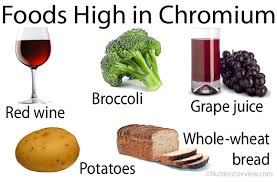
The following foods are some good sources of chromium:
Broccoli
Broccoli is often mentioned as a food containing chromium and is also a nutritious nonstarchy vegetable.
Whole Grains
Whole-grain foods can supply chromium, along with fiber, and other nutrients.
Meat and Poultry
Meat and poultry are sources of chromium, but the amounts vary.
Green Beans
Green beans are another good source of chromium in vegetables.
Potatoes
Potatoes also contain chromium, but like all foods the portion size is important for blood glucose control.
Nuts
Nuts are another good source of chromium and also provide protein, fats, and minerals.
Other foods
Fruits, seafood, eggs and some grain products also contain chromium.
Another important point is that the amount of chromium varies in different foods. So I would not try to calculate a daily amount for your entire meals.
Eating a variety of healthful foods is a better approach.

Chromium From Food vs. Chromium Supplements
There is an important difference between obtaining chromium from food and taking a concentrated Chromium supplement.
When you are getting chromium from food, you are also getting:
- Fiber
- Protein
- Vitamins
- Minerals
- Healthy fats
Plus a variety of other naturally-occurring substances
You are able to get much larger doses of chromium by using a concentrated supplement, which is why I like to think of chromium in terms of components of an overall diet, rather than a nutrient that needs to be “maximized”.
In addition, the NIH recommends that you try to get as many nutrients as possible from food and beverages, and that you should aim to do that whenever possible.
Chromium vs Chromium Picolinate
Chromium is the mineral/trace element. Chromium picolinate is a chemical form used in dietary supplements. They are not two different nutrients.
When a supplement label says ‘chromium 200 mcg (as chromium picolinate),’ the 200 mcg refers to elemental chromium, not 200 mcg of the entire chromium picolinate compound.
How Chromium May Affect Insulin Signaling?
There’s an interesting biological theory behind chromium research.
Chromium has been studied because it may influence insulin signaling and potentially potentiate insulin action, although the precise mechanism has not been established.
Researchers suspect that a compound called chromodulin, which may bind to chromium, may attach to the insulin receptor, and may cause the body to react as if insulin had arrived.
Researchers have proposed that chromium may influence insulin signaling, but this proposed mechanism does not demonstrate that chromium acts like insulin or produces the same clinical effects as insulin.
But that doesn’t mean that taking them will have that effect.
The fact that a trace mineral may be involved in a biological process doesn’t mean that manipulating that process will have a clinically useful effect.
Which is why you need clinical trials.
And you need to know that these trials have been inconsistent.
Some found that chromium supplements have beneficial effects on people with diabetes.
Others did not.
Chromium Side Effects and Safety
Serious adverse effects appear to be uncommon, but the available safety data are not strong enough for me to view high-dose chromium supplementation casually. Chromium is not something that is inherently safe simply because it is a mineral.
Reported side effects and adverse effects associated with chromium supplementation include:
- Stomach upset
- Bloating
- Headache
- Insomnia
- Mood changes
- Skin reactions
Rare but serious adverse effects have also been reported, including kidney dysfunction or failure, liver dysfunction, rhabdomyolysis, dermatitis and hypoglycemia.
Chromium and Kidney or Liver Disease
This point needs special attention.
The NIH warns patients with kidney or liver disease to be careful when considering high-dose chromium.
This is relevant to Type II diabetics, since kidney disease frequently accompanies diabetes.
If you are dealing with any of the following:
- chronic kidney disease
- reduced kidney function
- liver disease
- abnormal liver tests
- multiple chronic illnesses
Consult your doctor before starting a chromium supplement. Just because it is available in the drug store does not mean that it is safe for you.
Can Chromium Interact With Diabetes Medication?
Yes.
This is in fact one of the most important safety concerns.
Supplements of Chromium may cause decrease in blood sugar levels in some individuals.
Because chromium may affect blood glucose, combining it with insulin or glucose-lowering medications could potentially increase the risk of hypoglycemia in some people.
The risk depends on the person’s medication regimen, glucose levels and individual response; it should not be assumed that everyone taking chromium with metformin or insulin will experience hypoglycemia.
The NIH specifically mentions the interaction with:
- Insulin
- Metformin
- And other diabetes medications
Chromium may also interfere with the absorption of levothyroxine, a drug used to treat hypothyroidism.
Therefore, if taking any prescription drugs, make sure to inform your pharmacist or doctor of your Chromium supplementation.
Chromium and Metformin
Metformin is an established therapy for patients with type 2 diabetes.
Chromium is a nutritional supplement.
They are not interchangeable.
If you are taking metformin and considering the use of chromium, you must ask yourself if the chromium is appropriate, not that it may replace metformin.
Never discontinue or reduce the dose of metformin based on the assumption that chromium is controlling your blood glucose or HbA1c.
If, after making dietary, exercise, medical or pharmacologic changes, including the addition of supplements, your blood glucose or HbA1c is better controlled, consult your healthcare professional to determine if adjustments to your therapeutic regimen are needed.
Chromium and Insulin
If you are using insulin, be careful of adding chromium unless you first consult your healthcare professional.
If chromium has an effect on glucose levels in your specific situation, taking it with insulin could increase the risk of hypoglycemia.
Never lower your dose of insulin if you start taking Chromium.
If you experience unexplained changes in blood sugar after starting a supplement, contact the healthcare professional managing your diabetes.
Frequently Asked Questions About Chromium and Type 2 Diabetes:
How much chromium a day for type 2 diabetes?
There is no established chromium dose that the American Diabetes Association recommends for people with type 2 diabetes to improve blood sugar.
Clinical studies on chromium use have used varying amounts, frequently between about 50 to 1,000 mcg a day.
However, these research doses must not be mistaken for a recommendation that everyone with diabetes take chromium.
| Life stage | Adequate Intake |
|---|---|
| Adult men 19–50 | 35 mcg/day |
| Adult women 19–50 | 25 mcg/day |
| Adult men 51+ | 30 mcg/day |
| Adult women 51+ | 20 mcg/day |
| Pregnancy | 30 mcg/day |
| Breastfeeding | 45 mcg/day |
What is a low dose of chromium for diabetes?
There is no established low dose for diabetes.
Two hundred micrograms has been used in research and is found in a common supplement form, but that does not make it the right amount for everyone with type 2 diabetes.
Is 400 mcg of chromium safe?
400 mcg/day has been used in chromium supplements and is within the range studied in clinical research.
However, there is no established diabetes-specific safe or optimal dose. Safety depends on the person, the duration of use, kidney and liver function, other medications and the specific product.
Is 500 mcg of chromium too much?
There is no simple answer.
Some studies have used amounts in this range, but that doesn’t make 500 mcg an ideal diabetes dose.
People with liver or kidney disease should talk to a healthcare professional before taking chromium.
Is 600 mcg of chromium picolinate effective?
Some clinical research has used 600 mcg or similar of chromium picolinate.
However, evidence across studies is inconsistent.
Therefore, 600 mcg is a research dose, and is not a recommended amount for everyone.
Is 1,000 mcg of chromium safe?
A dose of 1,000 mcg/day has been used in some clinical trials, but that does not mean it has been established as a universally safe or appropriate daily dose.
There is no official tolerable upper intake level (UL) for chromium because the available evidence is insufficient to establish one.
High-dose supplementation should be approached cautiously, particularly by people with kidney or liver disease or those taking medications that affect blood glucose.
Does chromium picolinate lower blood sugar?
Some studies report improved blood glucose or HbA1c with chromium picolinate; however others found no benefit.
Can chromium lower HbA1c?
Some systematic reviews and meta-analyses have reported a modest reduction in HbA1c with chromium supplementation.
However, the results are not consistent enough to consider chromium an HbA1c-lowering agent.
Can chromium reverse insulin resistance?
There is not enough evidence to make this claim.
Some studies suggest chromium may improve indicators of insulin resistance, but insulin resistance is multi-factorial and chromium has not been established as a treatment that reverses it.
Can chromium replace metformin?
No.
Chromium is not a replacement for metformin, insulin, or other prescribed diabetes medication.
How long does chromium take to lower blood sugar?
There is no reliable timeline.
Clinical trials on chromium and blood sugar have varied in length, from weeks to months, and have yielded inconsistent results.
It would be misleading to suggest that anyone can expect chromium to reduce blood sugar after a certain number of weeks.
Is chromium safe for people with diabetes?
Chromium appears to be tolerated by many people, but supplements can lead to side effects and there have been isolated reports of serious adverse effects with high intake.
People with kidney or liver disease should be particularly careful. Chromium can also interact with diabetes medication.
Can chromium help with weight loss?
Chromium has been studied for its effects on weight gain and body composition, but the evidence is not strong enough to suggest chromium is an effective weight-loss supplement.
It should not be seen as a substitute for an appropriate eating pattern, physical activity, and sleep, and evidence-based obesity treatment when indicated.
It is always good to learn How to Lower Blood Sugar Naturally.
Which foods are naturally high in chromium?
Foods that contain chromium include broccoli, green beans, whole grain products, meat, poultry, potatoes, nuts, and other foods.
The amount present varies considerably.
What is the best chromium supplement for diabetes?
Should I take chromium if I have type 2 diabetes?
Not unless you’ve spoken with your healthcare professional, since the 2026 ADA Standards of Care do not recommend chromium supplementation for glycemic benefits.
If you are considering it, discuss your particular circumstances, medications, and the proposed dose with your healthcare professional.
How to Decide Whether Chromium Is Appropriate for You?
So that you may get the answer that is right for you, if you’re thinking about using chromium, I’d do the following simple checklist:
- Ask yourself why you want to take the supplement.
- Are you trying to reduce HbA1c?
- Want to improve insulin sensitivity?
- Looking to reduce fasting glucose levels?
Or did you see some fancy ad on social media claiming chromium was the newest miracle supplement for glucose metabolism? It’s important to know why you want it.
- Talk to your pharmacist or doctor.
If you are already using insulin or a glucose reducing agent and want to start another drug, it’s important to tell your pharmacist.
- Make sure you read the label on the container.
If you’re using a chromium-containing agent, make sure that you know whether the manufacturer is telling you how much chromium it has in micrograms or milligrams.
It’s easy to mix up mcg with mg.
A 1,000-mcg supplement has as much chromium as a 1-mg supplement.
- Make sure you aren’t taking other drugs that may interfere with chromium’s effects.
People with advanced kidney disease, liver disease, or other significant medical conditions should not start high-dose chromium supplementation without discussing it with their healthcare professional.
- Don’t try to use chromium as a shortcut.
If you have high HbA1c, you probably can’t blame it all on lack of chromium in the diet. Your whole diabetes plan is more important than a single supplement.

If we answer the question about the title of this article literally, the first thing I would change is the unit.
You don’t generally speak about chromium in grams when you’re talking about nutritional or supplemental nutrition.
You speak about it in micrograms (mcg).
And there is no established amount every person with type 2 diabetes should be taking every day of a supplemental chromium.
Research has tried different amounts, including roughly 50 to 1,000 mcg per day.
Some have found an improvement in blood glucose, HbA1c, insulin, or insulin resistance.
Others haven’t.
The 2026 American Diabetes Association Standards of Care do not recommend chromium for glycemic benefits.
So I wouldn’t tell every person with type 2 diabetes to take 200, 400, 600, or 1,000 mcg.
Instead if you’re considering chromium, talk to your doctor, pharmacist, or registered dietitian about the specific supplement and amount.
That is a much safer conclusion than trying to find the largest dose you can take.

Bottom Line
Chromium is a trace element found in many foods and dietary supplements. It has been the focus of scientific research for many years due to its potential role in glucose metabolism, and its relation to insulin.
Some studies suggest that chromium may modestly improve measures such as HbA1c, fasting glucose or insulin resistance in certain populations, while other studies have found little or no benefit.
The most accurate conclusion is that it is not useless, but it’s certainly not a miracle cure for diabetes either.
If you are thinking about chromium for type 2 diabetes:
- Remember that chromium amounts are generally measured in micrograms, not grams.
- Do not assume that a higher dose produces a greater benefit.
- Do not automatically treat 200, 400, 600, or 1,000 mcg as a recommended diabetes dose.
- Remember that chromium picolinate is a supplement form, not a diabetes medication.
- Consider getting nutrients primarily from a varied diet.
- Be particularly cautious if you have kidney or liver disease.
- Discuss chromium with your healthcare professional if you take insulin or other diabetes medication.
- Never stop or reduce diabetes medication because of chromium.
- Don’t use chromium as a replacement for proven diabetes treatment.
- Remember that the current ADA Standards of Care do not recommend chromium supplementation for glycemic benefits.
If there is one lesson I would take away from the chromium research, it is that more is not necessarily better. A 1,000-mcg research dose is not automatically better than 200 mcg, and a supplement containing more chromium is not automatically a better supplement. The bigger question is whether chromium supplementation is appropriate at all.
A nutrient can have a plausible biological role and even produce statistically significant effects in some clinical studies without being established as an effective treatment for a disease.
In connection with this mineral and its relationship to type 2 diabetes, my final conclusion is that it is essential to focus on developing an entire diabetes management regimen, not just a single supplement.
Some people also enquire How Much Flaxseed to Eat Per Day for Type 2 Diabetes.
Educational Disclaimer:
This article is for educational and informational purposes only. It is not a substitute for professional medical advice, diagnosis, or treatment.
If you have type 2 diabetes, kidney disease, liver disease, are pregnant or breastfeeding, take any medications as directed by a healthcare professional, or have any other medical conditions, consult your doctor, pharmacist, dietitian, or other medical professional before taking chromium.
Do not stop or reduce insulin, metformin, or any medication prescribed for your diabetes due to any information you may find online.
Recommended:
- Effect of Chromium Supplementation on Glucose
- Why trust bestdietarysupplementfordiabetics.com?
- For educational purposes only
- https://pubmed.ncbi.nlm.nih.gov/9356027/
- https://pubmed.ncbi.nlm.nih.gov/26302914/
- https://ods.od.nih.gov/factsheets/chromium/HealthProfessional/
- https://www.nccih.nih.gov/health/diabetes-and-dietary-supplements-what-you-need-to-know
- https://pubmed.ncbi.nlm.nih.gov/39541030/
(Last Updated: September 2026)

admin
All Posts