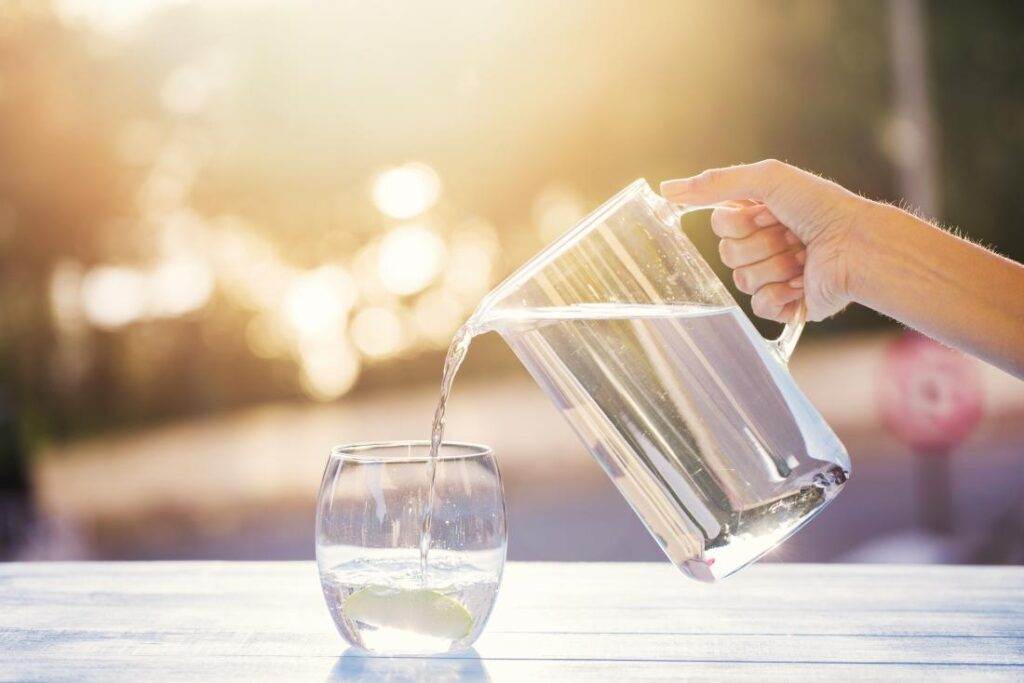
Hey! My name is Madhukar & I find it extremely tough to answer the query, “how much water do I drink in a day to control my blood sugar levels”.
The reason for the same is that not 2 diabetics can have the same hydration needs/requirements (despite both of them being diabetic).
While hydration is important for any individual, a diabetic needs more water than a normal person because of his/her fluctuating blood sugar levels. This extra thirst is owing to the changes on the natural metabolic processes of a diabetic.
Nonetheless, if you are a diabetic and you ignore your “thirsty desires” then, it is highly likely that you shall fall prey to a wide variety of ailments.
Some of the most common ones include heat diseases, kidney failure, eyesight issues and slow wound healing.

Points Covered in this Article
- The Connection between Fluid & Diabetes
- So, what is the Importance of Insulin in My Body?
- How Much Water do I Drink Every Day to Keep My Blood Sugar in Control?
- Did Drinking Water Lower My Blood Sugar Levels?
- What is My Ideal Water Intake Routine?
- How I Avoid Dehydration while Travelling?
- FAQs on Water to Treat Diabetes
- Takeaway
So, we can start with (first) explaining the importance of hydration for a diabetic. If you do suffer from Type 1 or Type 2 Diabetes, you need to be hydrated at all times.
The Connection between Fluid & Diabetes
Luckily in my case, I can produce insulin but the quantity is far less than what my body needs.
So, what is the Importance of Insulin in My Body?
Well, insulin is a hormone that is produced in my pancreas. Once it is produced, insulin is responsible for piggybacking the glucose that is present in my blood stream into my cells.
The food that I consume is converted into. Glucose tends to enter my bloodstream and if it is not shuttled into the cells, my blood sugar levels shall increase.
Insulin shuttles the glucose into my cells and the cells use the glucose to help me carry out my daily errands. This is because the cells turn glucose into usable energy.
In my case, insulin does get produced but in very low quantities. Owing to this very reason, I am unable to flush out extra glucose from my blood stream and into my cells.
The extra glucose within my bloodstream is forced into my kidneys. My kidneys work doubly hard to flush out the extra sugar form my blood. This in turn leads to excessive urination. The end result is dehydration.
Hence, I need more and more water as I am always thirsty.

How Much Water do I Drink Every Day to Keep My Blood Sugar in Control?
Well, I weigh 80 kilograms. So, if I am right with my math (which I am however not very good at), I should be ideally drinking 4 liters of fluids every day.
This is because as per bestdietarysupplementfordiabetics.com, 1 liter of water for every 20 kilograms is ideal for an active human being. So, as per my weight, 4 liters per day of fluids should be considered ideal.
Nonetheless, I am a diabetic. So, how much water or fluids should I be consuming?
Well, maybe 1 liter more. So, including all the glasses of water, X cups of herbal tea and juices that I have on a daily basis, I should be consuming close to 5 liters every day.
I prefer to drink lemon juice along with plain water. I also like to add a couple of cups of herbal tea to my daily fluid intake. These are completely sugar free and loaded with antioxidants.
In a nutshell, my 4 to 5 liter a day of hydration includes not just water but also herbal tea and juices (especially lemon juice).
I find water to be among the best dietary supplement for diabetics handmade by nature.

Did Drinking Water Lower My Blood Sugar Levels?
Well, this is a million dollar question. I struggled for months in order to find the correct answer to this question. After reading several research studies on this topic and consulting doctors specializing in treating diabetes, I reached to a final conclusion.
Unfortunately, water alone is not capable of lowering the glucose levels present in your blood stream. Nonetheless, water does help flush out extra insulin by pushing it out of the kidney.
Water also helps lower glucose levels by occupying more space within the blood stream. If the water content in your body is high, there would less space for glucose within your blood stream and vice versa – getting the point!
So yes, indirectly, water does lower the amount of glucose present within your blood stream.
What is My Ideal Water Intake Routine?
Water is among the best natural remedies for diabetes. While it does not directly lower my blood glucose, it indirectly instructs my body to produce less sugar by flushing out excessive insulin via urination.
I spread out my water evenly throughout the day. In the morning when I wake up, I always drink a glass of warm water. Then, I try to drink water every 20 minutes – just maybe 1 to 2 sips. This helps me avoid dehydration.
I also drink lemon juice and a few cups of green tea. All this is without artificial sugar. At the same time, I also like to drink buttermilk or snack on a cup of greek yogurt or some nuts.
Finally, I drink a glass of warm water an hour before I sleep. I never drink water just before hitting the sack as doing so always makes me urinate not once but several times at night.
Nonetheless, if my last glass of water is an hour before going to sleep, I always manage to sleep peacefully without having to rush to the bathroom at night.

How I Avoid Dehydration while Travelling?
Another sub topic that I would like to cover in this article is dehydration for diabetics. While it may seem normal as any individual who drinks less water may suffer from dehydration, for a diabetic, dehydration can lead to serious health complications.
To start with, I always avoid dehydration by drinking a sip or two of water every 15 to 20 minutes. Nonetheless, if I experience any of the below mentioned symptoms, I am even more careful of my fluid intake:
@ My mouth starts to become unusually dry.
@ My tongue starts to feel dry and loses its natural feel of saliva.
@ My head starts to ache without any reason.
@ I always keep an eye on the color of my urine. If it is dark in color and thick in consistency then, I am indeed dehydrated.
@ If my eyes feel dry and lose their natural fluid, this is again a sign of dehydration.
@ Finally, I take note of unusual tiredness and fatigue. If without putting in any physical effort, I feel tired, it is certainly owing to dehydration.
So, when I am travelling, I always keep in mind to place two 1 liter water bottles into my backpack. I also keep a few lemons that I usually slice and squeeze into a glass of fresh water.
FAQs on Water to Treat Diabetes:
This frequently asked questions section offers a range of simple answers to how the consumption of water affects blood sugar levels. The information below highlights how water intake impacts glucose values and helps improve A1C levels.
Q-1: Can water consumption on a daily basis decrease blood sugar levels in a matter of hours?
Water intake has a profound impact on blood sugar levels despite the complexity of the mechanism involved. The most important finding from diabetes care research is that people who drank more water had a 21% decreased risk of hyperglycemia than those who did not. Moreover, diabetes care research confirmed that increased water intake capacity is associated with overall improved wellness.
Q- 2: Is there a specific water consumption level that has a positive impact on reducing blood sugar levels?
The minimum recommended water intake for improving blood sugar levels is 1.5 – 2 liters per day. According to the French study, those who drank less than a half a liter of water had a much higher risk of high blood sugar than those who consumed more than one liter. Increased water intake had a short-term blood sugar improvement impact, but only consistent healthy behavior has a long-term positive impact on blood sugar.
Q-3: Can dehydration cause high blood sugar?
Mild dehydration can lead to increased blood sugar levels. Even being dehydrated by one percent can increase free cortisol levels by fifty percent, which in turn raises the risk of insulin resistance by fifty percent. Scientists report that dehydration increases blood sugar levels by ten to fifteen percent on average.
Q-4: Can drinking water before meals help reduce blood sugar levels?
Drinking water before meals is an easy way to keep blood sugar levels in check. A simple rule of thumb is having 300 – 500 ml of fluid before meals. Having something refreshing before eating will help you feel full, so there is no drastic spike in blood sugar after eating.
Q-5: Can water consumption affect HbA1c levels?
The fact that water intake does not directly affect A1c levels is well-established. However, increased water intake capacity is associated with overall improved wellness, which in turn contributes to reduced A1C levels.
Researchers found that proper water intake volume decreases A1C levels by 0.3 – 0.5% on average over time as a part of the healthy lifestyle changes.
Q-6: Are there any risks associated with increased water intake as a way of reducing blood sugar levels?
It is vital to know that water intoxication can occur when someone drinks more than four or five liters of water per day. Water intoxication is a dangerous condition associated with severely decreased sodium levels in the case of excessive fluid intake.
The kidneys can only get rid of an amount of fluid equal to the water consumption rate of no more than 3 – 4 liters per day on average. Therefore, it is vital never to exceed the recommended daily water intake.
Q-7: Can water consumption timing impact blood sugar levels?
Drinking water in the morning helps to kick-start the metabolism to set the tone for the whole day. Similarly, staying well-hydrated before meals is vital to avoiding glucose spikes after eating.
Q-8: Can sugar-free drink substitution with water impact blood sugar levels?
Sugar-free beverages replacement with water is an easy way to decrease morning glucose levels by around ten mg/dl per day. Besides, every single glass of sweetened beverage replaced with water means hundreds of empty calories eliminated from your diet.
Q-9: Can cold and warm water consumption impact blood sugar levels?
Drinking cold and warm water can both help control blood sugar levels, but the benefits of each are different. Cold water triggers a thermodynamic reaction, which provides an extra metabolic boost. On the other hand, warm water promotes proper digestion and saliva production, which are both essential for health.
Q- 10: Can I know if increased water consumption is positively influencing my blood sugar?
Improved fluid intake capacity and consistent healthy behavior will ultimately reward you with reduced fasting glucose levels and reduced post-meal glucose spikes. Other positive changes to look out for include increased vitality and more frequent urination.
Takeaway
I would encourage all of you out there who are considering, “how to lower blood sugar naturally” to treat fluid intake as a sure-shot natural remedy. Do drink ample fluids and do encourage other diabetics to do the same.
After all, if I can maintain optimal blood sugar levels by increasing my daily fluid intake, so can you.
Educational Notice:
This article is provided for educational purposes only and does not replace professional medical advice.
Before making changes to supplements, diet, or medications, consult a qualified healthcare provider.
Learn more about our standards:
Recommended:
- https://bestdietarysupplementfordiabetics.com/how-a-sedentary-lifestyle-causes-type-2-diabetes/
- https://bestdietarysupplementfordiabetics.com/how-family-history-causes-gestational-diabetes/
- https://bestdietarysupplementfordiabetics.com/how-diabetes-affects-daily-life-in-brownsville-cameron-county-texas/
References:

admin
All Posts