
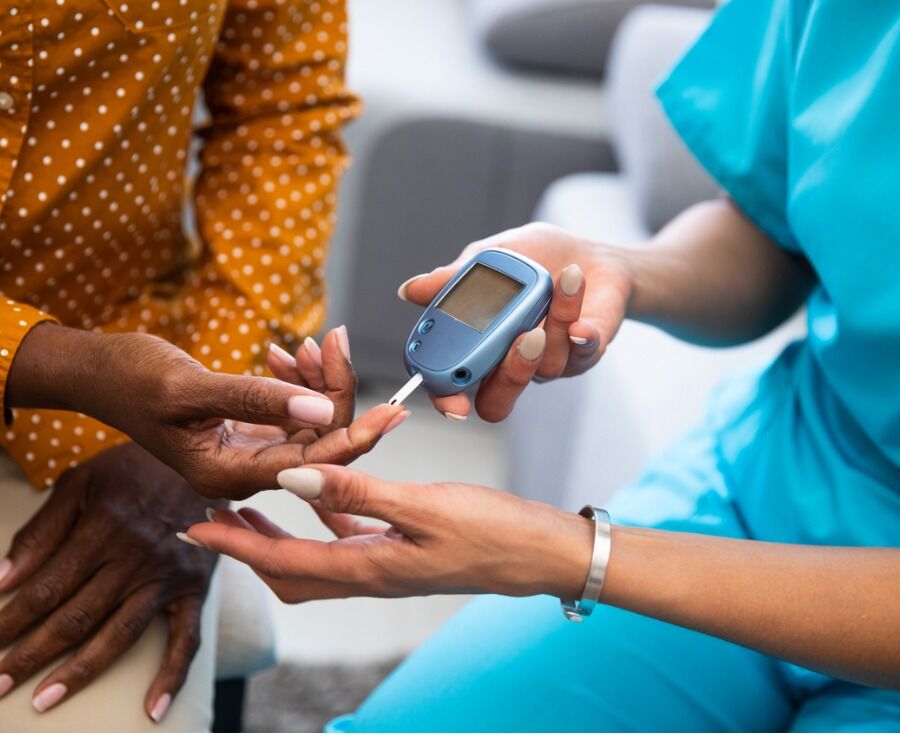
Diabetes is a major health problem in Brownsville and the Cameron County, Texas area. Local data show a high prevalence of diabetes and obesity, along with other metabolic risk factors.
It is also important to note that having a high diabetes prevalence does not necessarily mean that diabetes prevalence has increased year after year.
Different studies take measurements on different populations and different time-frames. While some regional and temporal research found an improvement of diabetes and obesity indicators in some areas, more recent measurements still find alarmingly high rates.
Why is such a high diabetes burden in Brownsville, Texas, a concern?
The reality is that diabetes risk can arise due to a vast array of reasons.
A few of these are obesity and metabolic risk, physical inactivity, dietary patterns, limited healthcare access, genetic susceptibility, older age, and socioeconomic factors.
Important: This article addresses risk factors at a population level, and does not mean that any individual person will develop diabetes due to their ethnicity, weight, income, age or lifestyle. Individual risk of developing diabetes is complex and is influenced by a number of factors.
What Do We Know About Diabetes in Brownsville?
Recent local data help put the issue into perspective.
The city of Brownsville reports that an estimated 20.2% of adults had diabetes in 2022 compared with an average of 11.6% across the cities included in the comparison dashboard. The same local data estimated that 47.1% of Brownsville adults had a BMI of 30 or higher in 2022.
These figures suggest a substantial local burden, but should not be interpreted as evidence of an increase every year.
Regional research has produced a more complicated picture. Reporting on data from the University of Texas Rio Grande Valley and UTHealth Houston has described declines in obesity and type 2 diabetes rates between 2004 and 2020 while emphasizing that the overall burden is high.
This distinction is important because the most useful question is not simply whether diabetes is going up or down in one particular dataset.
The more important question is:
Why does Brownsville continue to have such a high level of diabetes and metabolic risk?
Several interconnected factors help explain it.
High Levels of Overweight, Obesity, and Metabolic Risk
Overweight and obesity are important risk factors for type 2 diabetes, particularly when excess body fat is associated with insulin resistance.
Type 2 diabetes develops through a combination of insulin resistance, impaired insulin production, genetic susceptibility, and other factors. Excess body fat can increase insulin resistance and make blood glucose regulation more difficult.
The City of Brownsville reported that an estimated 47.1% of adults had a BMI of 30 or higher in 2022.
Furthermore, a study undertaken among Mexican American adults in the Cameron County Hispanic Cohort found substantial levels of obesity and diabetes.
Specifically, among Mexican American men in the Cameron County Hispanic Cohort who participated in the study, approximately 50% were classified as obese and 26.8% had diabetes.
The study applied to a specific population and time frame, and the figures should not be extrapolated to the entire population of Brownsville at present.
These findings provide important historical evidence of substantial metabolic risk in a specific Brownsville-area population, but they should not be treated as current prevalence estimates for the entire community.
Why obesity matters
Overweight and obesity are associated with greater insulin resistance and a higher risk of type 2 diabetes.
As such, the high prevalence of obesity among the studied population is an integral part of the community’s understanding of diabetes.
Physical Inactivity Can Increase Diabetes Risk
Regular physical activity helps the body to utilize glucose and improve insulin sensitivity, weight, cardiovascular health, and overall metabolism.
Regular physical activity can improve insulin sensitivity, support healthy weight management, and reduce the risk of type 2 diabetes. Conversely, insufficient physical activity is associated with a higher risk of type 2 diabetes and cardiovascular disease.
Those reasons can include:
- Long or irregular work hours
- Limited time for structured exercise
- Transportation issues
- Lack of convenient recreational facilities
- Concerns about walking or exercising outdoors in very hot weather
- Financial limitations
- Family and caregiving responsibilities
Public-health research consistently identifies physical inactivity as an important risk factor for type 2 diabetes and other chronic conditions.
For Brownsville residents, physical activity does not necessarily take place in a gym.
It can include any form of transportation, swimming, dancing, resistance exercises, sports, or other types of activity that are suitable for an individual.
Food Environment and Dietary Patterns Matter
Diet is yet another aspect of the issue, although it is not as straightforward as some may want it to be.
It would be wrong to claim that the high diabetes burden in Brownsville is simply the result of poor dietary habits.
There are a number of social and economic factors that contribute to the development of a poor diet, such as:
- The cost and availability of food
- Socioeconomic status
- Food insecurity
- Workplace constraints
- Family eating patterns
- Nutritional education
- Culturally specific food traditions
- Marketing and advertising
Frequent consumption of sugar-sweetened beverages and energy-dense, highly processed foods can contribute excess calories and added sugars to the diet.
On the other hand, diets high in calories may lead to overweight and obesity, which are risk factors for developing the condition.
Traditional Mexican and South Texas foods should not be treated as inherently unhealthy. Healthy eating can incorporate culturally familiar foods while paying attention to portions, overall dietary quality, added sugars, and total calorie intake.
Socioeconomic Conditions Can Affect Diabetes Risk and Care
Diabetes is not just a behavioral problem.
There are socioeconomic risk factors for developing type 2 diabetes and receiving appropriate treatment and preventive care.
Studies conducted by the Cameron County Hispanic Cohort have investigated the link between diabetes and socioeconomic status (SES), education, insurance, and access to care.
A study conducted among Mexican American adults in Brownsville, Texas, found that low SES was associated with a high prevalence of undiagnosed diabetes in certain age groups.
Another study by the Cameron County Hispanic Cohort found that the presence of insurance was positively associated with diabetes diagnosis and treatment.
This connection is significant because diabetes often develops insidiously.
Type 2 diabetes can develop gradually and may not cause obvious symptoms, so some people may have the condition without knowing it. Patients who have prediabetes or early diabetes will not receive the benefit of preventive care, screening, laboratory tests, or other treatments if they do not have access to appropriate medical facilities.
Socioeconomic conditions can also affect whether someone can consistently afford:
- Healthy food
- Prescription medications
- Glucose-monitoring supplies
- Transportation to appointments
- Preventive medical care
- Diabetes education
Therefore, socioeconomic conditions should be viewed as part of the wider environment influencing diabetes rather than as evidence that individual residents are responsible for the community’s diabetes burden.
Healthcare Access and Delayed Diagnosis Matter
Access to healthcare is especially crucial due to the disease’s potential to remain asymptomatic for extended periods of time.
The Cameron County Hispanic Cohort study has yielded the most telling statistics on the subject for the area.
Among the 2,000 Mexican American adults studied in the Cameron County Hispanic Cohort between 2003 and 2008, the weighted prevalence of diabetes was 30.7%. This was a study-specific estimate and should not be interpreted as the current diabetes prevalence of all Cameron County residents.
This does not imply that 30.7% of all people residing in Cameron County are chronically diabetic, since the sample only consisted of 2000 Mexican-American adults selected from Brownsville between the years 2003 and 2008.
The study found that approximately half of the participants with diabetes had previously been diagnosed, highlighting the extent of undiagnosed disease in that historical study population.
The same research has also established a link between the presence of health insurance and the likelihood of receiving a diagnosis and subsequent treatment.
Why early diagnosis matters
A person may have diabetes or prediabetes without experiencing obvious symptoms.
Health checkups and appropriate testing can help identify diabetes or prediabetes earlier, allowing people and their healthcare providers to make appropriate lifestyle changes, monitor the condition, and determine whether treatment is needed.
Family History and Genetics Also Play a Role
Genetics is another factor that explains the situation, although it should be discussed with caution.
Having a close relative with type 2 diabetes increases the likelihood of an individual also developing it as well. Genetic predisposition may affect a person’s ability to produce insulin and respond appropriately to insulin, as well as body fat distribution, amongst other factors.
Research has found differences in type 2 diabetes risk among racial and ethnic populations in the United States. However, these differences cannot be attributed to ethnicity alone and may reflect interactions among genetic, environmental, socioeconomic, healthcare, and behavioral factors.
However, one cannot attribute diabetes causation to ethnicity.
A person’s likelihood to develop the disease is a result of complex interactions between genetic, environmental, socioeconomic, health-related behavioral, body-composition, aging, family-history, and various other factors.
This is why it is wrong to suggest that Brownsville has a high diabetes burden simply because many of its residents are of Hispanic ethnicity. Instead, the demographic makeup of the area is only one piece of a much more complex puzzle.
Brownsville’s Demographics Help Explain the Population-Level Risk
Cameron County has a large Hispanic or Latino population. According to Census estimates, about 89% of county inhabitants identify as Hispanic or Latino.
The City of Brownsville has an even higher share of residents who identify as Hispanic or Latino.
This is significant to the story because the incidence of diabetes is different for various racial and ethnic groups in the United States.
But that does not mean that being Hispanic causes diabetes
Researchers instead are looking at the interactions between genes and other variables, such as the environment, socioeconomic factors, diet, healthcare access, and behaviors.
The Cameron County Hispanic Cohort is valuable because it examines multiple factors associated with diabetes rather than focusing on a single explanation.
Age and the Risk of Type 2 Diabetes
Age is another risk factor for developing type 2 diabetes.
The risk of type 2 diabetes generally increases with age, although the condition can develop in younger adults as well.
The U.S. Census Bureau projects that 15.7% of Cameron County’s inhabitants are currently 65 or older.
Nevertheless, diabetes is not a condition limited to older adults.
The Cameron County Hispanic Cohort study found a significant number of metabolically unhealthy young Mexican American males.
A study found that 16.9% of males under 35 in the cohort had diabetes, and 51.3% were either prediabetic or diabetic.
It is crucial to note that these figures concern a particular study population rather than all young men in Brownsville.
Yet they provide an important lesson:
Metabolic risk factors often manifest long before the arrival of old age.
As a result, prevention and appropriate screening should not be regarded as exclusively post-retirement events
The Built Environment and Daily Living Can Influence Risk
Where people live can impact their ability to maintain a healthy lifestyle.
The built environment can influence how easy it is for people to be physically active and access healthy food. Sidewalks, parks, recreation centers, grocery stores, public transportation, and safe walking routes can all affect daily choices.
For example, people who have limited access to safe places for physical activity, affordable healthy foods, reliable transportation, or flexible work schedules may face additional barriers to maintaining healthy routines.
Is Diabetes Actually Increasing in Brownsville?
This question deserves a careful answer.
Although the title of this article reflects the search topic and concerns about diabetes in Brownsville, the datasets do not support a simple uninterrupted year-by-year increase.
While several studies have shown improvements in diabetes and obesity rates over certain periods, recent local data continue to show high levels of diabetes.
For example, the City of Brownsville reports that 20.2% of adults had diabetes in 2022.
Therefore, the most accurate conclusion is:
Brownsville continues to have a significant diabetes burden, and there are multiple factors that contribute to the persistence of the issue, despite improvements in some datasets.
This distinction is important because public-health data can vary depending on:
- the year measured
- the population studied
- whether the diabetes is self-reported or clinically measured
- whether the estimate applies to Brownsville or all of Cameron County,
- whether the data are crude or age-adjusted, and
- methodology used to estimate prevalence
Therefore, comparing numbers from different studies that fail to consider these differences can create a misleading picture.
Why Brownsville’s Diabetes Problem Cannot Be Explained by One Factor
The strongest evidence points to an interaction among multiple factors.
Several major factors can influence type 2 diabetes risk at both the individual and community level:
Metabolic Risk
High levels of obesity and other metabolic abnormalities increase the likelihood of developing type 2 diabetes.
Physical Activity
Insufficient physical activity is associated with greater risk of weight gain, insulin resistance, type 2 diabetes, and cardiovascular disease.
Diet and Food Environment
Cultural, economic, and social factors associated with the availability and accessibility of foods and eating patterns play a role in the development of type 2 diabetes.
Socioeconomic Conditions
Income, employment, education, physical and social environment within households, and other socioeconomic factors are associated with type 2 diabetes risk and outcomes.
Healthcare Access
Insurance and access to preventive care are important factors that influence screening and treatment of type 2 diabetes.
Genetics and Family History
Inherited genetic factors can influence a person’s susceptibility to type 2 diabetes.
Age
The likelihood of developing type 2 diabetes increases as one ages; however, it can occur in young adults as well.
Community Environment
Built environment, including access to transportation, physical activity opportunities, and access to food, can affect physical activity and dietary patterns.
Each of these contributing factors interacts with the others.
For example, a person with a genetic susceptibility for diabetes may have decreased access to healthy food options, a more stressful job, less free time, or reduced access to healthcare services.
Assessing any one of these risk factors without considering the whole would be a limitation.

What Can Brownsville Residents Do About Diabetes Risk?
Understanding of the reasons for the predominance of diabetes in the community may help in identifying ways of its prevention and treatment.
The methods that people may use are:
- Keeping a diet that is healthy and suits individual preferences and financial possibilities
- Leading an active lifestyle
- Working toward a healthy weight, if appropriate for the individual
- Avoiding tobacco or seeking help to quit smoking
- Having enough sleep
- Undergoing tests for diabetes screening and risk evaluation if recommended by a healthcare provider
- Discussing family history of diabetes with a healthcare professional
- Taking diabetes medications exactly as prescribed
- Having A1C or other diabetes testing when recommended by a healthcare professional.
Seeking advice if financial, therapeutic, nutritional, or educational issues interfere with self-care or management of the disease
People with already diagnosed diabetes should take measures to prevent complications and not wait for complications to appear.
For practical diabetes-management guidance, see our guide on how to manage diabetes in Brownsville and Cameron County.
For information about how diabetes can affect work, family life, routines, and other aspects of everyday life, see our guide on how diabetes affects daily life in Brownsville and Cameron County.
Frequently Asked Questions About Diabetes in Brownsville
Why do so many people in Brownsville have diabetes?
The high diabetes burden in Brownsville likely reflects several interacting factors, including obesity and metabolic risk, physical activity, dietary patterns, socioeconomic conditions, healthcare access, family history and genetics, age, and the broader environment.
Does obesity explain why diabetes is so prevalent in Brownsville?
While obesity is a significant contributor to the development of type 2 diabetes and is prevalent in this area, it cannot be the sole cause.
There are several other potential causal factors, such as genetics, age, family history, physical activity, diet, access to healthcare, access to healthy food, socio-economic status, and the local environment.
Are Hispanics more likely to get diabetes?
Research has found that Mexican American populations in the United States can have a higher risk of type 2 diabetes than some other population groups. However, ethnicity alone does not determine an individual’s diabetes risk.
However, this cannot be the sole explanation for the diabetic trends in Brownsville, as there are several other contributing factors.
Can a young adult get diabetes?
Yes. Type 2 diabetes can develop at any age, including in younger adults.
Type 2 diabetes can occur at any age.
In fact, one of the goals of the Cameron County Hispanic Cohort is to assess the risk factors in young Mexican-American men and women.
Can poverty cause diabetes?
Socioeconomic factors can contribute to the development of diabetes.
Poverty can limit access to certain foods, healthcare resources, and medications.
The Cameron County Hispanic Cohort found a relationship between socio-economic status and undiagnosed diabetes in this specific population.
Socioeconomic disadvantage can influence diabetes risk and care, but poverty alone does not determine whether an individual will develop diabetes.
Can lack of health insurance affect diabetes diagnosis and treatment?
Yes. In the Cameron County Hispanic Cohort, insurance coverage was associated with the likelihood that diabetes and other chronic conditions were diagnosed and treated.
Is diabetes becoming more and more prevalent in Brownsville?
This is difficult to say, as there are many different data sets to consider.
In some areas and some populations, diabetes prevalence has decreased, while in others, especially in recent years, it has increased.
Available evidence does not establish a simple, uninterrupted year-by-year increase in diabetes prevalence across all Brownsville populations. What the evidence does show is that diabetes remains a substantial local public-health concern.
What is the Cameron County Hispanic Cohort?
The Cameron County Hispanic Cohort is a long-running research cohort involving Mexican American participants recruited from Brownsville, Cameron County, Texas. Researchers have used the cohort to study diabetes, obesity, hypertension, healthcare access, socioeconomic factors, and other health-related issues.
Where can Brownsville residents go for information on diabetes?
The Cameron County Public Health website provides resources for people with diabetes and those concerned about their diabetes risk.
The county has a list of services for county residents that can help get a person to a healthcare provider to get tested.
Patients can also talk with their healthcare provider about diabetes screening, education, and nutritional counseling.
Bottom Line
Diabetes remains a significant public-health concern in Brownsville and Cameron County. The available evidence does not support a simple explanation or a straightforward year-by-year increase across every population.
Instead, diabetes risk reflects an interaction of factors that can include overweight and obesity, physical inactivity, dietary patterns, socioeconomic conditions, healthcare access, family history and genetics, age, and the broader community environment.
Local data show a substantial diabetes burden, while historical research also highlights challenges involving undiagnosed disease and access to care. Understanding these factors can help support earlier detection, prevention, and better diabetes management in the community.
References:
- City of Brownsville — Chronic Disease in Brownsville
- CDC — Cameron County Hispanic Cohort, 2003–2008
- CDC — Young Mexican American Men, Cameron County Hispanic Cohort, 2004–2015
- Socioeconomic Status, Obesity and Diabetes — Cameron County Study
- U.S. Census Bureau — Cameron County, Texas
- U.S. Census Bureau — Brownsville, Texas
- Cameron County Public Health — Diabetes

admin
All Posts